Dive into the rich history and captivating flavors of French pâtisserie with this guide. It’s perfect for both seasoned bakers and newcomers to French pastry. You’ll learn the secrets to making iconic desserts like flaky croissants, delicate macarons, and decadent éclairs.
Start a culinary journey through the evolution of traditional french pastry. Learn the essential tools, ingredients, and techniques to improve your baking skills. Bring the essence of patisserie into your kitchen.
Discover the vibrant world of traditional baking. Here, the artistry of culinary arts meets the timeless charm of french pastry. From medieval France’s grand banquets to today’s charming bakeries, this guide takes you through the evolution of patisserie.
Meet the iconic french pastry chefs whose work has shaped the industry. Get ready for a sensory adventure as you learn techniques and unlock the secrets of global cuisine with a French twist.
The Rich History of French Patisserie
The story of French pastry-making is a fascinating journey through culinary history. It started with the lavish banquets of the Middle Ages. Now, it’s seen in the famous Parisian bakeries that symbolize French culinary traditions.
From Medieval Banquets to Modern Bakeries
In the Middle Ages, making elaborate pastries was a sign of wealth. Skilled chefs created beautiful desserts, showing off their sugar work and decoration skills. Over time, the pâtisserie industry grew. Iconic Parisian bakeries raised French pastry-making to an art.
Iconic French Pastry Chefs and Their Legacy
French pastry chefs have made a lasting impact. Marie-Antoine Carême, known as the “king of chefs,” changed the game with new techniques and recipes. Gaston Lenôtre, the “father of modern pâtisserie,” inspired many with his focus on perfection and detail.
These famous chefs and others like them continue to influence French pastry. Their work keeps the history of French pastry alive and inspiring for food lovers everywhere.
Essential Tools and Ingredients
Making traditional French pastries needs a well-stocked kitchen and knowing the basics. You’ll need special tools and ingredients to get the right texture and taste. It’s important to understand the must-haves for French baking.
Equipping Your Pastry Kitchen
Begin by getting the essential items for French baking. You’ll need a marble pastry board for rolling dough, a strong stand mixer for mixing, and quality baking sheets. Also, have piping bags and nozzles for fancy designs on your pastries. Don’t forget a bench scraper, a pastry cutter, and a digital scale for accurate measurements.
Understanding French Baking Terminology
Get to know the special terms used in French patisserie. “Lamination” means layering butter with dough for flaky pastries like croissants. “Mise en place” means preparing all your ingredients and tools before baking. Knowing these terms will make French recipes easier to follow.
Mastering the Basics: Doughs and Batters
Making perfect French pastries begins with learning to make great doughs and batters. You’ll need to know how to mix, knead, and shape them. This includes making everything from light and flaky puff pastry to rich and creamy crème pâtissière. Getting the dough right is key for any pastry chef.
When you start with french pastry doughs, you’ll see how important it is to work with delicate doughs. These doughs have layers of butter that you fold in. Learning to do this makes your pastries incredibly flaky. It’s a skill that helps you make famous treats like croissants and desserts with puff pastry.
You’ll also learn how to make pastry basics like crème pâtissière. This creamy filling is a big part of many French pastries. It’s a must-know for any pastry lover.

As you get better in the kitchen, you’ll understand how important temperature, moisture, and fermentation are. These factors help your doughs and batters turn out perfectly. Whether you’re just starting or have been baking for years, learning these basics will take your French pastry skills to the next level.
Global Cuisine: French Pastries with International Influences
In the world of pâtisserie, cultures are mixing more than ever. French pastry chefs are now blending global flavors and baking traditions. This has led to a new kind of French pastry that combines classic French skills with flavors from around the world.
Now, you can find matcha-infused macarons from Japan and dulce de leche-filled éclairs from Latin America. These pastries mix French techniques with global tastes. So, you might enjoy croissants filled with mango or spiced chai, or a lemon tart with a hint of Middle Eastern rose water.
This trend shows how French pâtisserie is embracing diversity. It proves that classic French desserts can adapt to new flavors. Pastry chefs are making French pastries more exciting by adding international tastes.
If you love French pastries or enjoy trying new foods, this fusion is exciting. It’s a chance to explore the world through taste. So, jump into the world of global cuisine and French pastry fusion. Discover the amazing things that happen when French pâtisserie meets global flavors.
Classic French Pastries You Need to Try
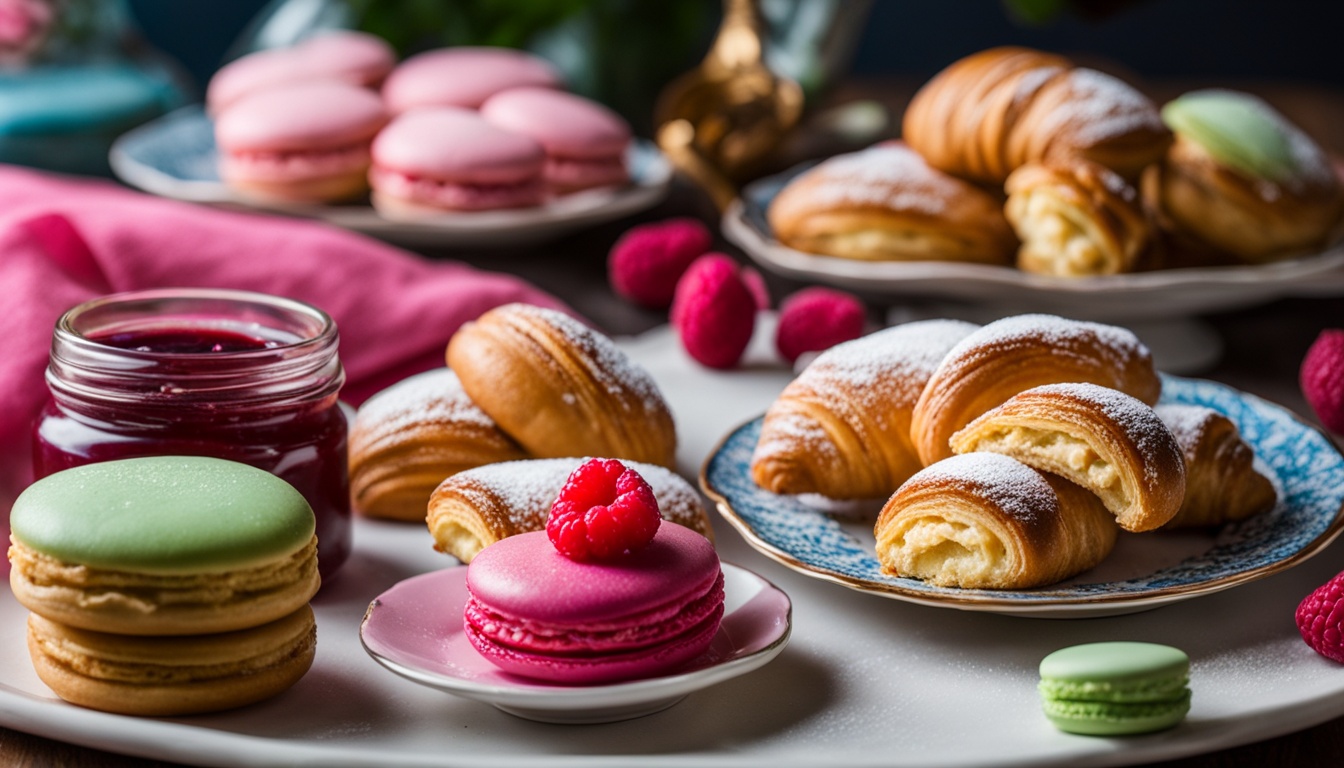
Explore the world of French pastry classics, where every bite shares a story of tradition and skill. The croissant, with its flaky, buttery layers, and the delicate macaron, have won the hearts of dessert lovers everywhere.
Croissants: The Epitome of French Baking
The croissant stands as the top pastry in French baking. Making these pastries involves a special process called laminating. This means folding and layering butter into the dough carefully.
This hard work creates the airy texture and rich taste that make croissants so loved. It’s a true sign of French baking skill.
Learning to make a croissant is a big achievement in French baking. With time and care, anyone can make their kitchen smell like a Parisian bakery. The result is the delicious taste of freshly baked croissants.
Techniques for Perfect Pâtisserie
To improve your French pastry skills, learn the key techniques. Discover how to make your pastries look and taste like they’re from a bakery. Learn about lamination and how to get that perfect rise and flaky texture.
Mastering the Art of Lamination
Lamination is key for flaky croissants and puff pastry. It’s about folding and layering dough. This makes the dough have delicate, buttery layers that are a joy to eat.
It’s important to fold the dough right. This traps air pockets and makes the pastry seem like it’s made of many sheets. It’s what gives croissants their unique taste and feel.
Achieving the Perfect Rise and Flaky Texture
Baking science is vital for perfect pastries. It helps control the rise and keeps the texture light and delicate. By understanding proofing and baking, you can avoid problems like a dense or dry pastry.
Mastering these techniques will take your French pastries to the next level. You’ll get the flakiest, most delicious results every time.

Decorating and Plating French Pastries
Take your French pastries to the next level with decorating and plating. Learn the art of piping and glazing to make your desserts look amazing. These skills turn your treats into stunning works of art.
Mastering the Art of Piping and Glazing
Piping techniques are key for adding beautiful designs to your pastries. You can swirl whipped cream into rosettes or pipe chocolate curls. These skills make your pastries look fancy.
Glazing adds a shiny finish that looks professional. Try mirror glaze or shiny ganache for a perfect shine and taste. Glazing brings out the best in your pastries.
Plating is just as important as decorating. Arrange your pastries with care, using fresh berries or edible flowers for extra beauty. How you present your pastries can make them the star of the show.
Hosting a French-Inspired Pastry Party
Bring the magic of a Parisian pâtisserie to your home with a french pastry party. Invite your friends and family for a culinary adventure. Show off your pastry skills and treat them to traditional French desserts.
Set the mood with Parisian-themed decor. Use striped awnings, lace, and vintage accents to bring the City of Lights to life. Make your space cozy and welcoming, perfect for celebrating french pastries.
Create a menu full of French pâtisserie favorites. Serve flaky croissants, rich éclairs, elegant macarons, and decadent tarts. Let your guests enjoy the delicious tastes and textures of these beloved treats.
As guests enjoy their treats, share your love for French baking. Tell stories of famous pastry chefs and the history of French patisserie. Encourage everyone to try decorating or piping techniques.
Your french pastry party will be a memorable event. It’s a chance to enjoy the tastes and charm of a Parisian pâtisserie at home. Your guests will leave with full hearts and a love for French pastries.
Troubleshooting Common Pastry Problems
Mastering French pastry-making is a journey with both highs and lows. It’s key to know how to fix common problems. Dealing with dense, dry, or uneven pastries can be tough, but there are ways to fix them. These solutions help you get the perfect texture and taste in your pastries.
Fixing Density, Dryness, and Other Issues
Density or dryness in pastries often comes from over-mixing, under-proofing, or wrong oven temperature. To fix this, work on your kneading and mixing. Make sure to proof your dough correctly and check your oven’s temperature and baking time. Also, learn about lamination and dough folding to get that flaky texture.
Uneven baking is another issue you might face. Make sure your oven is set right. Put the dough on the baking sheet evenly and use convection settings or turn the sheet while baking. These steps help with even heating, making your pastries look great.