
Get ready to be amazed by the incredible world of weather phenomena. From unusual rainbows to odd cloud shapes, our skies are full of nature’s stunning displays. We’ll share 10 amazing facts that will change how you see the sky.
If you love weather or just want to learn more, this journey will amaze you. Get ready to see the incredible power and beauty of our changing climate.
Introduction to Fascinating Weather Phenomena
The world is full of amazing weather events that capture our attention and show us nature’s power. From the stunning shapes of clouds to the beautiful lightning shows, the weather never stops amazing us. It’s always something new to explore and learn about.
The Wonders of Nature’s Forces
Let’s dive into the amazing weather events that shape our planet. We’ll look at towering thunderstorms, tornadoes, and the Northern Lights. These events show how complex and beautiful our atmosphere is.
Exploring the Unexpected
The weather is always surprising us. This part will show some of the most unexpected weather events on Earth. We’ll talk about rare weather like ball lightning, sun dogs, and ice storms. These events challenge what we think we know about the weather and show us nature’s power and unpredictability.
Rare and Fleeting Weather Events
The Earth’s atmosphere is always changing, showing us many rare weather events. These events, like sudden cloud changes and short-lived sky illusions, amaze us. They leave a strong impression on those who see them.

Rare cloud formations, like lenticular clouds, are one such event. They look like flying saucers and form over mountains. This creates a beautiful sight that can disappear fast.
Sun dogs are another rare sight. They look like rainbow spots on either side of the sun. These happen when sunlight goes through ice crystals in the air. You might see them in cold, dry weather.
These events show how powerful and complex our planet’s atmosphere is. Whether it’s a rare cloud or a brief sky illusion, they remind us of nature’s beauty. If we pay attention, we can see these wonders.
The Mesmerizing World of Clouds
Clouds are a captivating part of our world, changing often and taking shapes that amaze us. From thin cirrus clouds to tall cumulonimbus, the variety of clouds in our skies is amazing. These clouds are not just beautiful but also tell us about the weather.
Altocumulus clouds form beautiful waves in the sky. They happen when air moves and temperatures change. Cirrus clouds, high up, look like feathers and make us wonder.
But there’s more to see in the sky. Cumulonimbus clouds can go over 60,000 feet high and look like sculptures. These clouds show the power and beauty of nature. They remind us of the beauty and surprises of the world around us.
Fun Facts About Lightning Strikes
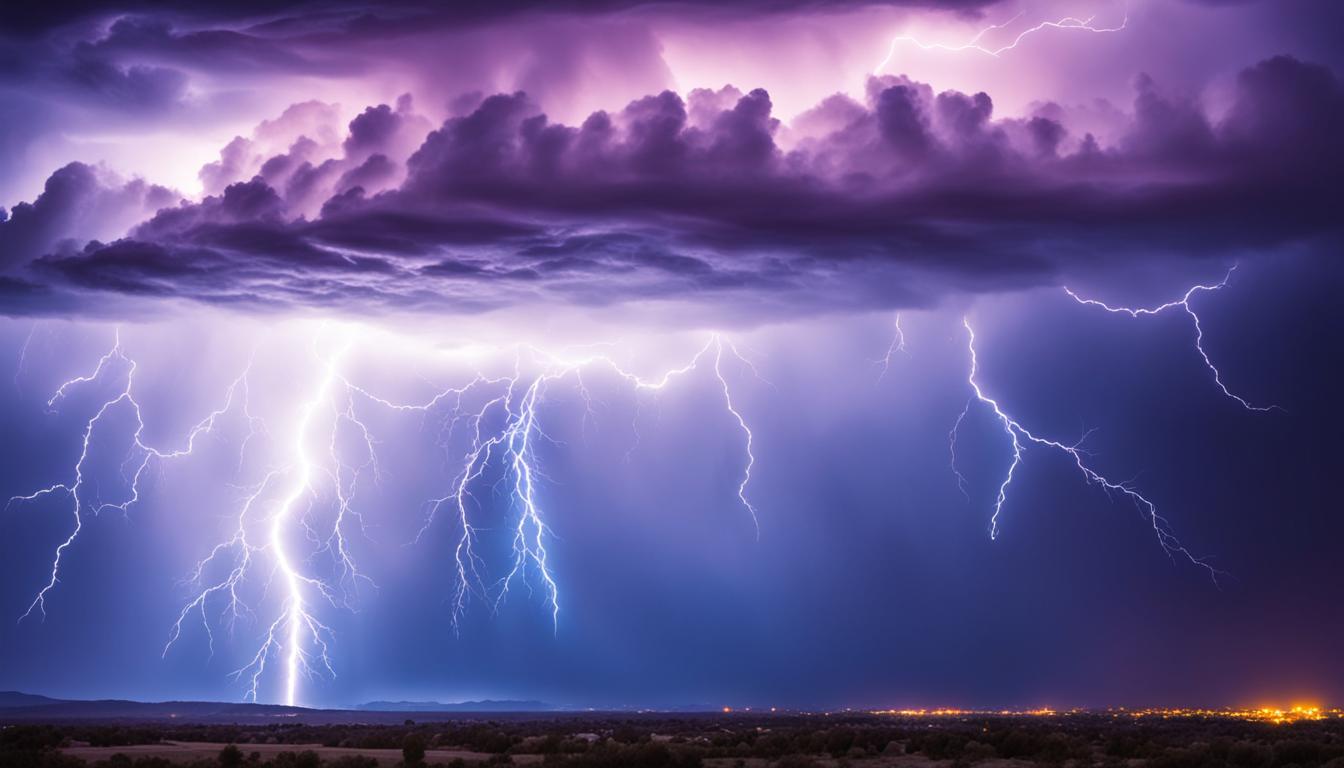
Lightning is a natural wonder that amazes us all. It has brilliant flashes and powerful bolts. Let’s dive into some fascinating facts about lightning strikes that show its science and unique traits.
Did you know lightning can get hotter than the sun’s surface? Yes, it’s true. The heat from a lightning strike can hit up to 54,000 degrees Fahrenheit. This heat makes the bright light we see during lightning.
Another cool fact is that a lightning bolt can have up to 1 billion volts of electricity. This power makes lightning dangerous, capable of destroying buildings and harming people. Also, lightning strikes happen more often than you think, with about 100 happening every second worldwide.
Lightning’s unique shapes and the science behind thunder are still mysteries to us. As we learn more about lightning, we’ll find even more interesting facts. These discoveries will show us the power and beauty of nature.
Unraveling the Mysteries of Rainbows
Rainbows have always fascinated humans, showing off nature’s colorful side. They are made when light and water work together in a special way. Let’s explore the science behind these beautiful sights.
The Science Behind Nature’s Colorful Display
Sunlight hits raindrops in the air, bending and spreading out into colors. This is called the “rainbow effect.” The sun’s rays go into the raindrops, bounce off the back, and come out at different angles. This depends on the light’s color.
The colors of a rainbow, from red to violet, come from how light bends in the raindrops. This is called dispersion of light. It’s what makes rainbows look so colorful and interesting to everyone.

The shape and where you see a rainbow depend on the sun’s position and the raindrops. No two rainbows are the same, making each one special and short-lived. By learning about the science behind rainbows, we can enjoy the mysteries of rainbows even more.
Extreme Weather Phenomena to Behold
The Earth’s weather can sometimes be truly amazing and scary. It produces extreme events that test our understanding and the strength of human societies. From huge thunderstorms to rare weather disasters, these events show the power and unpredictability of our planet’s weather.
Tornadoes are one extreme weather event. They are violently rotating columns of air that can destroy communities, causing a lot of damage and loss of life. These storms show the huge energy nature can release, with speeds over 200 miles per hour and destruction everywhere.
Supercell thunderstorms are also awe-inspiring. They are huge, rotating storms that can create hail the size of softballs, heavy rain, and sometimes tornadoes. These storms can be over 50,000 feet tall, making them as tall as the tallest buildings. They remind us of the power and complexity of our weather.
Rare cloud formations and hurricanes show the beauty and power of extreme weather. These events highlight the amazing diversity and unpredictability of nature. By understanding and appreciating these events, we learn to respect the forces that shape our world. We also see the need to prepare for future challenges.
Optical Illusions in the Sky
The sky often looks different than it seems, thanks to the Earth’s atmosphere. It creates sky optical illusions that amaze and confuse us. These weather-induced illusions show how our senses can be tricked by nature.
When Nature Plays Tricks on Our Senses
Mirages are a stunning example of nature’s visual tricks. They happen when hot air near the ground bends light, making it seem like there’s water or another object far away. This can look like a real oasis in the desert.
Another cool sky optical illusion is the sun dog. It happens when ice crystals in the air bend sunlight, creating bright spots on either side of the sun. These spots look like rainbows and show how our planet’s weather can change what we see.
Looking into these weather-induced illusions helps us appreciate nature’s complexity and beauty. From desert mirages to sun dogs in the sky, the Earth’s atmosphere is full of nature’s visual tricks.
The Power of Hurricanes and Tornadoes
Hurricanes and tornadoes are two of the most powerful and destructive storms on Earth. They show the strength and unpredictability of our weather. These storms can cause huge damage and are important to understand.
Hurricanes are huge storms that start over warm ocean waters. They get their energy from the water’s evaporation and condensation. These storms can have winds over 150 miles per hour, heavy rain, and huge storm surges that flood coastal areas.
Tornadoes are fast-spinning columns of air within strong thunderstorms. They can have winds over 300 miles per hour, making them very destructive.
The power of hurricanes and tornadoes is amazing. They show how strong nature can be. By studying these storms, we learn about their beginnings, growth, and how they affect us. These storms teach us about the power in our atmosphere.
Fun Facts About Snowflakes
The Intricate Beauty of Frozen Crystals
Snowflakes are delicate and ethereal wonders that grace us in winter. Each one is a unique masterpiece, with intricate designs that amaze us. They show the beauty of nature in a tiny form.
Did you know no two snowflakes are the same? The temperature and humidity change as they form, making each one unique. They can look simple or complex, showing the beauty of nature.
Snowflakes are not just pretty; they’re a science wonder. They start as tiny crystals that grow in the air, picking up water vapor. This process creates their unique shapes and patterns.